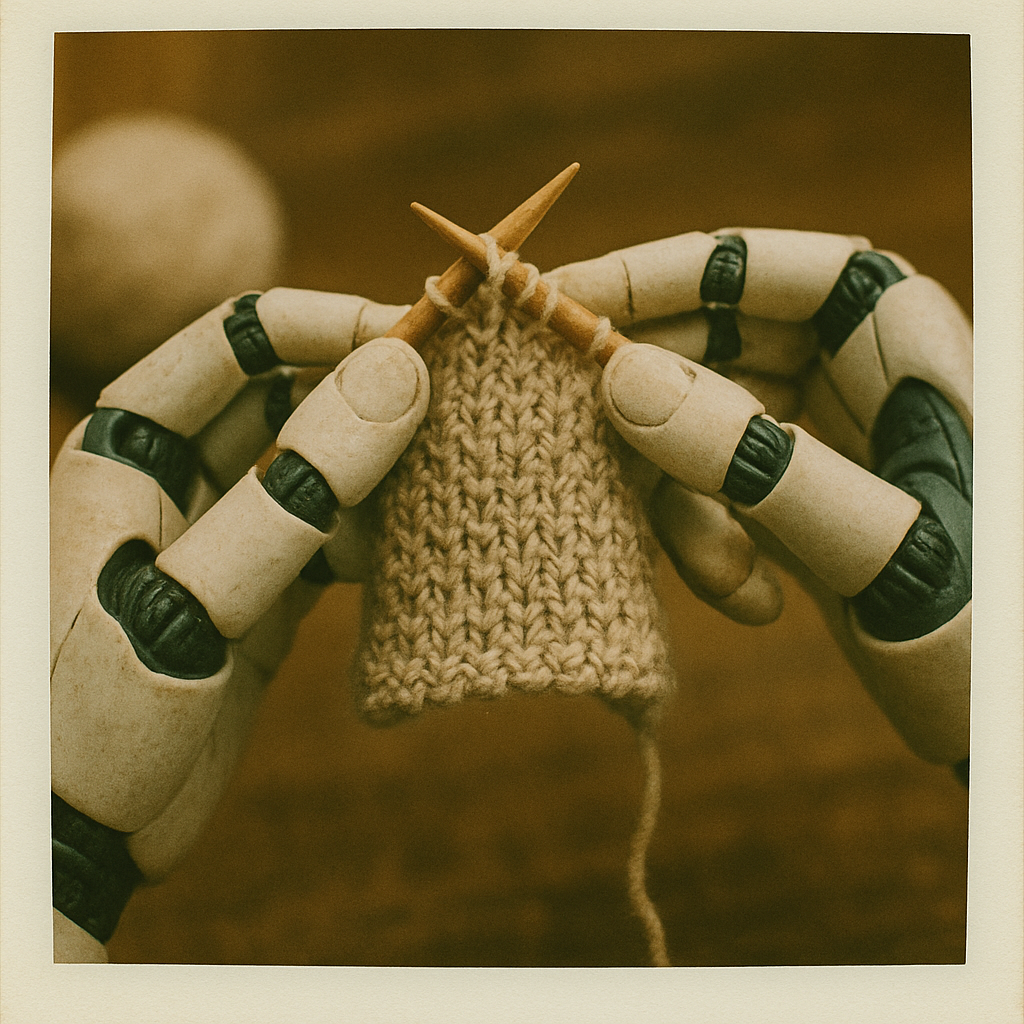
Knitting Machines
The knitting machine was one of the first technologies to reveal that information could be woven into matter.
Early mechanical looms used punch cards to encode patterns — physical instructions that told the machine when to lift threads, when to repeat structures, when to create variation. Long before computers processed images or language, textile machines were already operating as programmable systems. The fabric itself became the output of stored logic.
This history quietly links textiles, computation, and memory together. Many early computer concepts emerged directly from weaving technology: grids, matrices, binary decisions, looping sequences, modular structures. Even the language of software still echoes textile production — threads, stitching, patching, spinning up processes.
There is something profound about the fact that one of humanity’s earliest forms of computation was not built to calculate numbers or predict markets, but to make cloth. Information processing began as a domestic and material art form, embedded in rhythm, repetition, labor, and touch.
In a strange way, modern computing is still weaving. We feed symbolic patterns into machines, and they return structures made from invisible threads of logic. The medium changed; the loom remained.