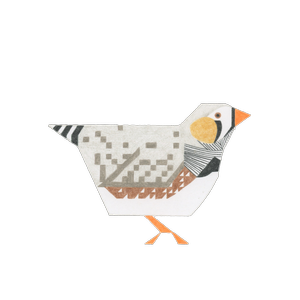
Merlin’s Birds
We’ve spent the better part of this year talking to Merlin. Not the wizard—though the magic feels close—but the bird identification app made by the Cornell Lab of Ornithology.
Every morning walk turns into a field trip now. We open the app, lift the phone, and listen. Merlin hears what we can’t, or names what we’ve forgotten. The world becomes annotated: House Finch, Carolina Wren, Black-throated Blue Warbler. It’s like living inside a living index.
What astonishes us most isn’t just the accuracy, but the generosity of it—the quiet hum of data and devotion that must have gone into its making. Thousands of recordings, countless volunteer observations, the patient training of neural networks that somehow learned the difference between a robin’s dawn song and a red-winged blackbird’s metallic trill.
Merlin doesn’t just identify birds; it deepens the act of looking. It turns attention itself into a kind of technology. When the phone screen lights up with a name, it feels like the forest has introduced itself.
We owe Cornell’s ornithologists—and the invisible community of recorders, coders, and wanderers who made this possible—an enormous thanks. Merlin’s Birds is more than an app; it’s a bridge between the digital and the wild, between sound and story, between us and the feathered world that’s always been speaking.