
Salon III: Summer (Jul-Sep 2027)
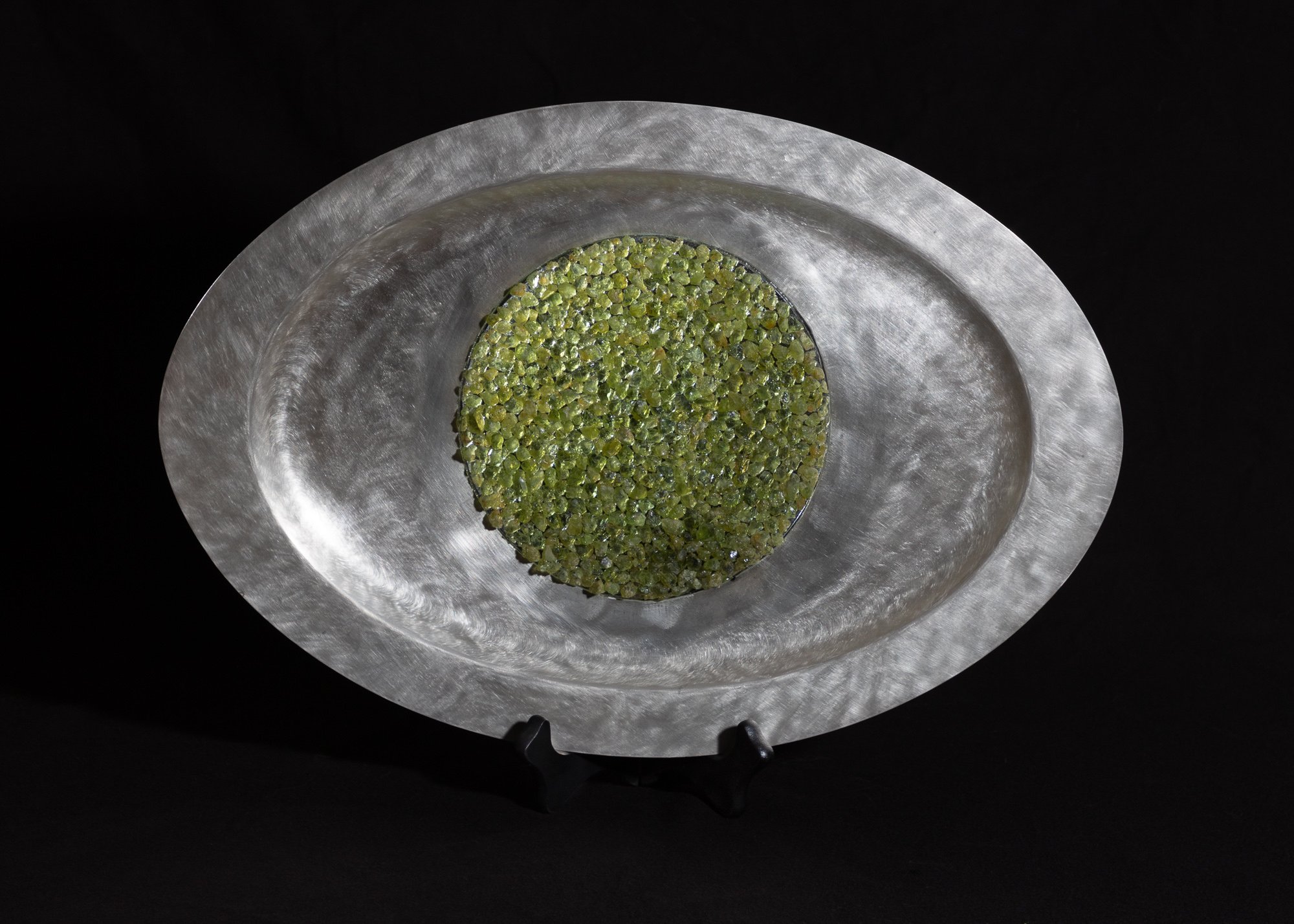
Peridot Green
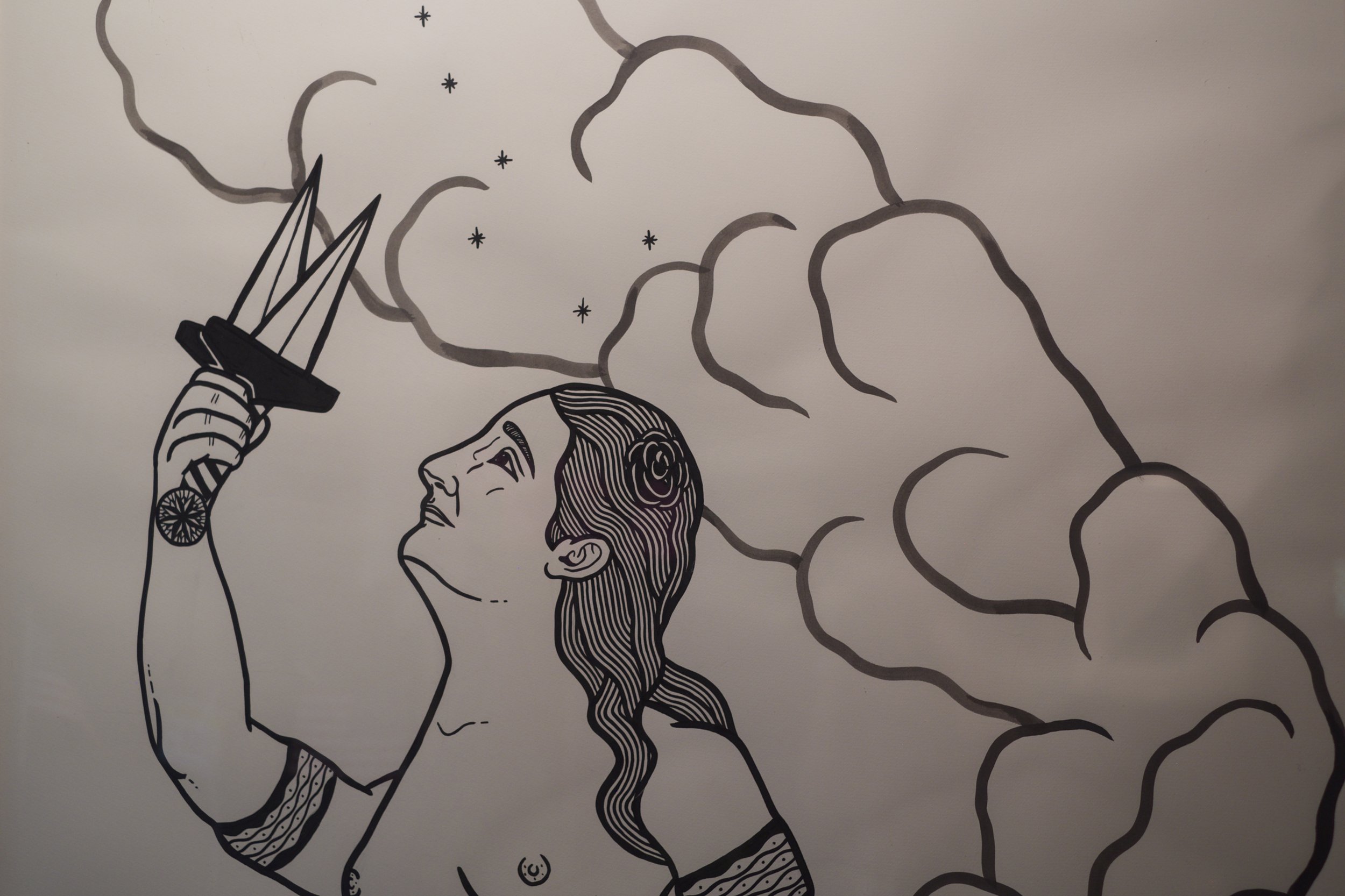
A Gathering of Clouds
A Gathering of Clouds
Our third salon looks at a purely naturalist categorical system, and the challenges of trying to organize something as complex as particle physics.

Cloud Necklace, Christina Van Der Merwe, 2015
Van Der Merwe created this necklace for her Of the Water line of jewelry.
PGIII: A Gathering of Clouds brings together approximately twelve works by four artists around one of nature’s oldest and most elusive classification systems. Clouds are made from ordinary materials—water vapor, airborne particles, pressure, and light—yet those materials continually assemble themselves into forms of extraordinary complexity. A cloud can be monumental or nearly invisible, benign or destructive, recognizable for only a moment before becoming something else. It is at once an object and an event: a visible body produced by forces that remain largely unseen. The artists gathered here approach clouds in this expanded sense, not only as subjects to be represented, but as structures through which we might consider perception, memory, technology, and collective life.
The exhibition takes its shape from the atmospheric taxonomy of clouds. High cirrus formations appear as traces and signals: thin marks drawn across a distant field. Middle clouds gather, veil, and retain, suggesting the accumulating work of memory and the archive. Low stratus formations surround the observer and alter visibility, like ambient systems that become difficult to perceive precisely because we live inside them. Cumulus clouds emerge as distinct figures—individual thoughts, images, or personalities—while cumulonimbus clouds develop vertically, gathering heat and material until accumulation becomes agency. The categories are not rigid bins into which artworks must fit. Instead, they describe behaviors. A work may drift like cirrus, obscure like stratus, repeat like altocumulus, or build toward the unstable force of a thunderhead.
Clouds are particularly generous teachers for artists. They resist the hard boundary of the outline and must instead be constructed through layers of color, density, reflection, and atmosphere. A painter cannot hold a cloud still long enough to make an exact copy; the task is to capture the character of a formation under a particular set of conditions. For photographers, clouds are simultaneously subject, backdrop, light diffuser, and weather warning. Across media, they reveal the act of observation as an encounter between control and surrender. The works in A Gathering of Clouds ask what it means to make an image of something that is always becoming. Each records a temporary alignment of forces—a moment when water, light, material, instrument, and attention briefly take form together.
When this exhibition was first conceived in 2015, “the cloud” also offered an alluring metaphor for networked thought. Personal memories and images appeared to evaporate into a shared technological atmosphere, dispersed across an apparently immaterial ether. In December of that year, I went scuba diving with the artist Trevor Paglen off the coast of Florida to see the internet’s physical body: a fiber-optic cable, encrusted with marine life, resting on the ocean floor. The experience revealed the strange misdirection within the metaphor. Cloud computing is not weightless. It is made from cables, switches, data centers, electrical grids, cooling water, mineral extraction, human labor, and contested territories. Like atmospheric clouds, technological clouds return what we give them. They carry communication and companionship, but also pollution, surveillance, anger, and concentrated power. What once appeared to be a field of distributed cognition has become a system of collective consequence.
Cloud-gazing offers another way of meeting such complexity. It asks us to observe without immediately mastering, extracting, or resolving what we see. We classify a cloud while knowing that it will exceed its classification; we recognize an image while knowing that another viewer may see something entirely different. A Gathering of Clouds inhabits that interval between naming and transformation. Its works invite us to notice the conditions gathering around us and to consider our participation in the weather they produce. No cloud forms alone. Each is the visible consequence of innumerable relationships—between ocean and atmosphere, heat and pressure, memory and image, individual action and collective force. All circuits are weather systems.