
Atlas of AI
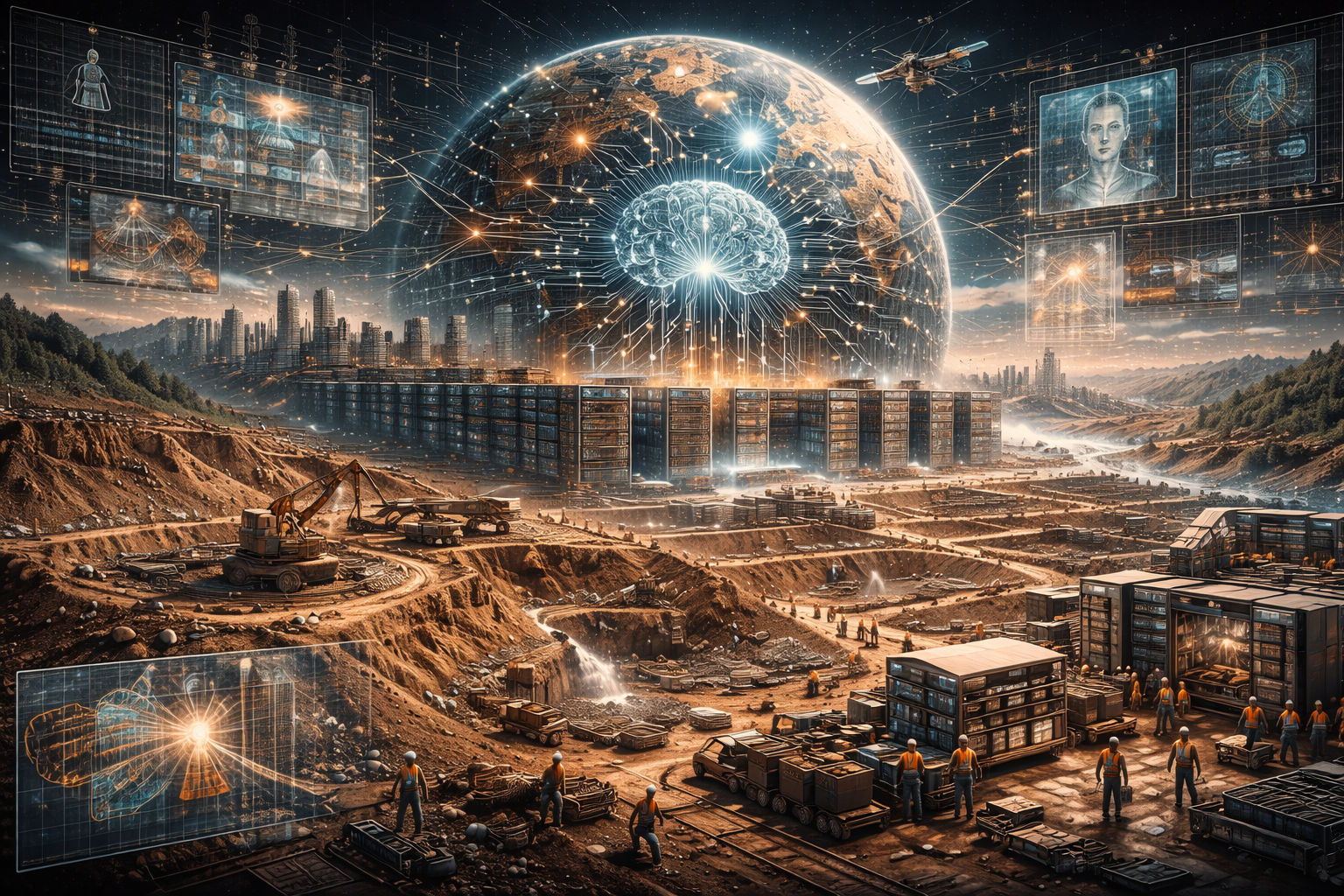
Atlas of AI dismantles the idea that artificial intelligence is virtual, clean, or autonomous. Kate Crawford insists instead on AI’s material reality: it is built from minerals pulled from the earth, powered by immense energy and water consumption, trained on human labor, and deployed within systems of surveillance and control.
For American Cyborg, April clarified scale. If February’s Passwords examined access at the level of the interface, Atlas of AI zoomed outward—to landscapes, supply chains, and geopolitical infrastructures. Crawford maps AI across five domains: earth, labor, data, classification, and power, revealing how “intelligence” is inseparable from extraction and governance.
This reading sharpened the project’s ecological awareness. Data centers are not clouds; they are factories. Datasets are not neutral; they are historical records shaped by inequality. Classification systems do not simply describe the world—they act upon it, often with lasting harm.
April became a grounding month. Atlas of AI stripped away metaphor and forced a reckoning with consequence. It reinforced a core American Cyborg principle: any intelligence worthy of trust must be accountable to the land it consumes, the people it depends on, and the lives it categorizes.
Placed between the symbolic thresholds of winter and the ethical hinge of June, April functioned as an atlas in the truest sense—a map not of possibility, but of responsibility.